


International Program
International Program
Since the early 1990s, the Health Equity Matters (formerly AFAO) International Program has worked to support stronger civil society responses to HIV, health and human rights in Asia and the Pacific. Grounded in principles of community ownership and a partnership approach, Health Equity Matters’ International Program works closely with communities most affected by HIV to engage in capacity development, organisational strengthening, policy, advocacy and strategic planning.
More recently, Health Equity Matters leads multi-country programs in Asia and the Pacific to ensure responses to HIV are sustainable. With an expanded scope, Health Equity Matters’ International Program is working with respective country governments and communities to scale up effective programs that can reduce HIV transmission in the region, sustain investments in community-led HIV prevention programs, and influence more efficient HIV financing policies.
Building on Health Equity Matters’ partnership approach, the International Program currently works with over 20 civil society and community-based organisations, the United Nations, World Health Organisation (WHO), the World Bank as well as Ministries of Health and other government stakeholders across ten countries in the Asia and the Pacific.

Sustainability of HIV Services for Key Populations in Southeast Asia Program (SKPA-2)
The Sustainability of HIV Services for Key Populations in Southeast Asia (SKPA-2) is a three-year, USD$12.5m program funded by the Global Fund to Fight AIDS, Tuberculosis and Malaria for the period 1 July 2022 to 30 June 2025.
Health Equity Matters is the Principal Recipient of the grant and provides technical assistance and support to local and regional partners.
SKPA-2 builds upon the work and achievements of the first iteration of the program called SKPA-1 which promoted HIV prevention services for key populations.
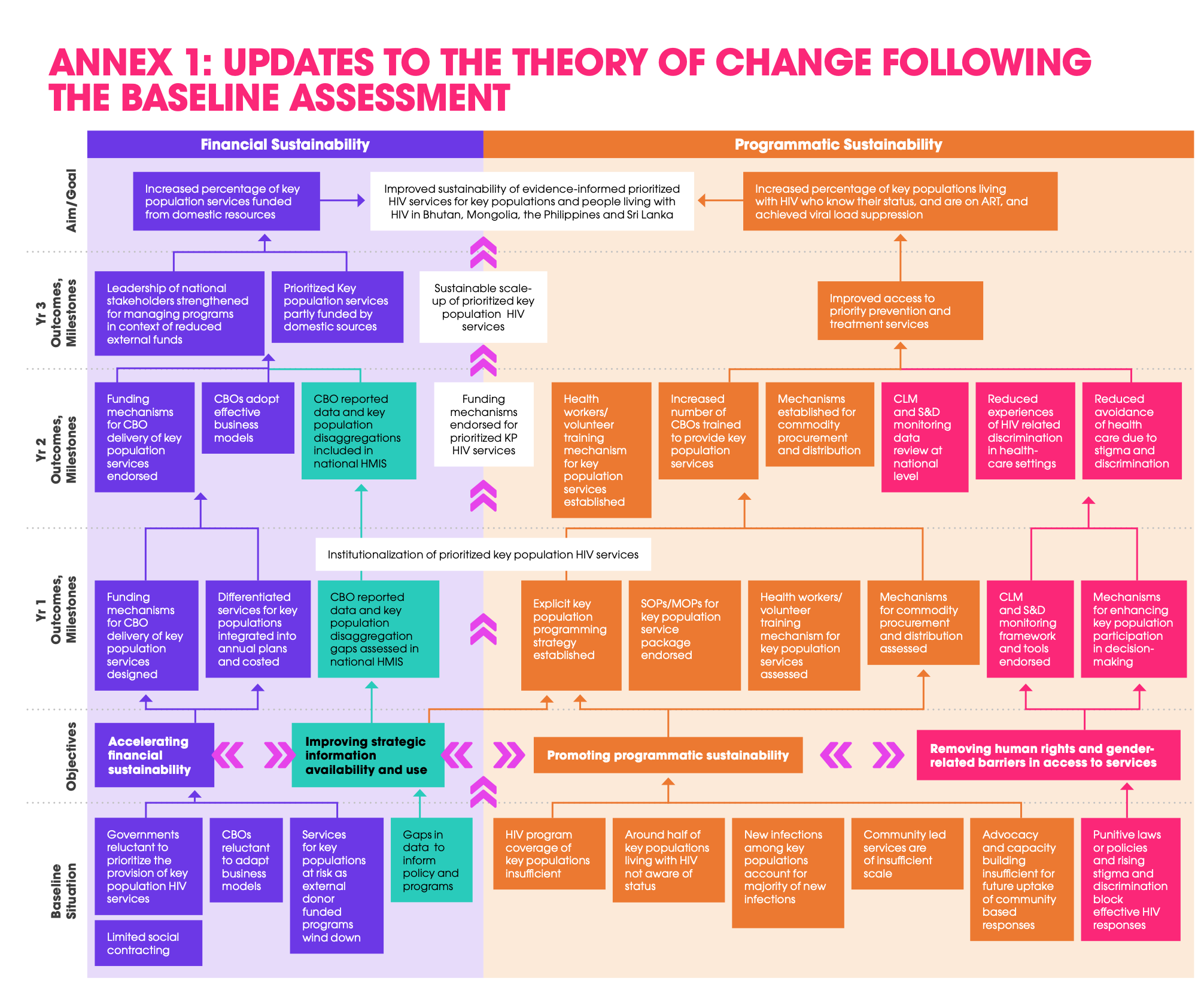
The aim of SKPA-2 is to improve sustainability of evidence-informed prioritized HIV services for key populations in Bhutan, Mongolia, the Philippines, and Sri Lanka. There are four program objectives:
- Accelerate financial sustainability.
- Improve strategic information availability and use.
- Promote programmatic sustainability.
- Remove human rights- and gender-related barriers to services.
Key populations bear the greatest burden of HIV in the countries in which SKPA-2 operates. Key populations are defined as:
- Gay men and other men who have sex with men
- Transgender people
- Female, male, and transgender sex workers
- People who inject drugs
- People in prison and other closed settings
It is critical that key populations are identified by their governments and within National Strategic Plans to ensure that appropriate community and peer-led services are scaled up and sustainably funded.
Ensuring the above is achieved is key as countries shift towards middle-income status their eligibility for international development funding reduces. Middle-income countries are expected to fully fund health and HIV programs domestically. However, funding services for key populations remains a contentious in many countries. This is because stigma and discrimination continue to act as barriers to prevention and treatment service provision. Human rights and gender related barriers including criminalization, religious laws, cultural norms, and violence also prevent key populations from accessing services.
As a result of these sensitivities, domestic government spending on key populations remains minimal. SKPA-2 aims to change this. A Theory of Change underpins SKPA-2 which outlines the application of a series of interventions that will institutionalise and scale up prioritised HIV services for key populations with domestic co-financing.
Health Equity Matters is accountable for achieving SKPA-2 objectives and provides strategic, programmatic, and technical leadership and coordination across the program. Health Equity Matters manages performance, monitoring and evaluation, and liaises with the Global Fund, technical partners, and key stakeholders. Health Equity Matters leads a consortium of organisations to implement the program.
In year 1, a comprehensive baseline assessment will be conducted in each country. The baseline will help partners to understand the financial landscape, political economy, strategic information needs, operational policy and regulatory barriers, and human rights and gender situation in each country. It will also assess the extent to which each country is prepared for financial sustainability of services for key populations and the extent to which key populations and people living with HIV are meaningfully engaged in their country’s national HIV responses.
The baseline will provide a blueprint to support national HIV programs and community-based partners to develop long-term, evidence-based HIV investment and sustainability plans. This is especially important as new National Strategic Plans will be developed during the grant period in most SKPA-2 countries.
Sustainability Pulse Check Dashboard
An end-of-program review in Year 3 will be conducted to assess progress and performance of activities against the initial baseline assessment.
SKPA Program Partners
Health Equity Matters as Principal Recipient leads a consortium of partners including country sub-recipients, regional and implementing partners.
Implementing and technical partners
Implementing and technical partners are engaged to provide expertise on areas such as cost modelling, PrEP, and community-led monitoring.
Governance of SKPA-2
The Regional Steering Committee, chaired by UNAIDS Asia-Pacific which provides stewardship and strategic direction at the regional and national levels to the SKPA-2 program. Membership of the Committee comprises a government and civil society representative from the Country Coordinating Mechanism (CCM) of each country, representatives from World Health Organisation, World Bank Global Practice Team, and the Australian Department of Foreign Affairs & Trade
The Committee ensures that the HIV strategies of participating countries guide SKPA-2 activities. The Committee also helps identify and remove barriers to effective implementation and facilitates cross-regional learning.
Key population participation is ensured through the Community Voice Standing Committee which facilitates greater learning across the region and the global south. This Committee feeds into the Regional Steering Committee and is comprised of regional and country networks of key populations and people living with HIV. The committee brings a critical voice to SKPA-2 oversight.
Learning Series
Learning and development is a central aspect of the Sustainability of HIV Services for Key Populations in Asia (SKPA-2) program to capitalize on the range of knowledge and expertise across our sub-recipients and partners. To promote learning and ensure national HIV programs are grounded technical best practice, we have launched a Learning Series. The Learning Series began in August 2022 to provide capacity building, knowledge sharing and foster peer-to-peer exchange for our partners across the Asia region.
The Learning Series documents including webinar recording, slides, technical briefs and accompanying document can be found here.